This blog’s time is now over. That has probably been obvious for a few years now, especially since the post immediately previous to this one dates from May 2023, and additions before that had been spotty for years. Chalk it up to another thing killed by the pandemic, I suppose. But we’re finally making it official. So here is something of a post mortem.
Don’t worry, though — the articles aren’t going anywhere (especially since this blog still gets visitors every day). We’re just not going to be adding any more. This blog will stand now as an archive.
I started this blog in 2012. At the time, it was independent of Ancient Faith Ministries, though of course dependent on the 2011 book Orthodoxy and Heterodoxy published by then-Conciliar Press. When the book was published, I was honestly shocked that it sold pretty well. Actually, I was shocked that CP even wanted to publish it at all, since the original O&H podcast (2009-2010) was available for free online for anyone to listen to. But nonetheless, John Maddex, the then-CEO, said that he wanted it to become a book. So I set to work on turning lectures into book, and it became the first edition.
With the enthusiastic reception of the book and also the podcast, I envisioned a multi-author blog which could discuss the same kind of thing — Orthodox Christians engaging critically with other religious traditions and even occasionally with aberrations that were creeping into some Orthodox circles — such as “corrective baptism” (i.e., baptizing people who have already been received as Orthodox Christians, communing in many cases for years). And that is what it was pretty solidly for about eight years, along the way becoming officially an Ancient Faith Blog in 2014.
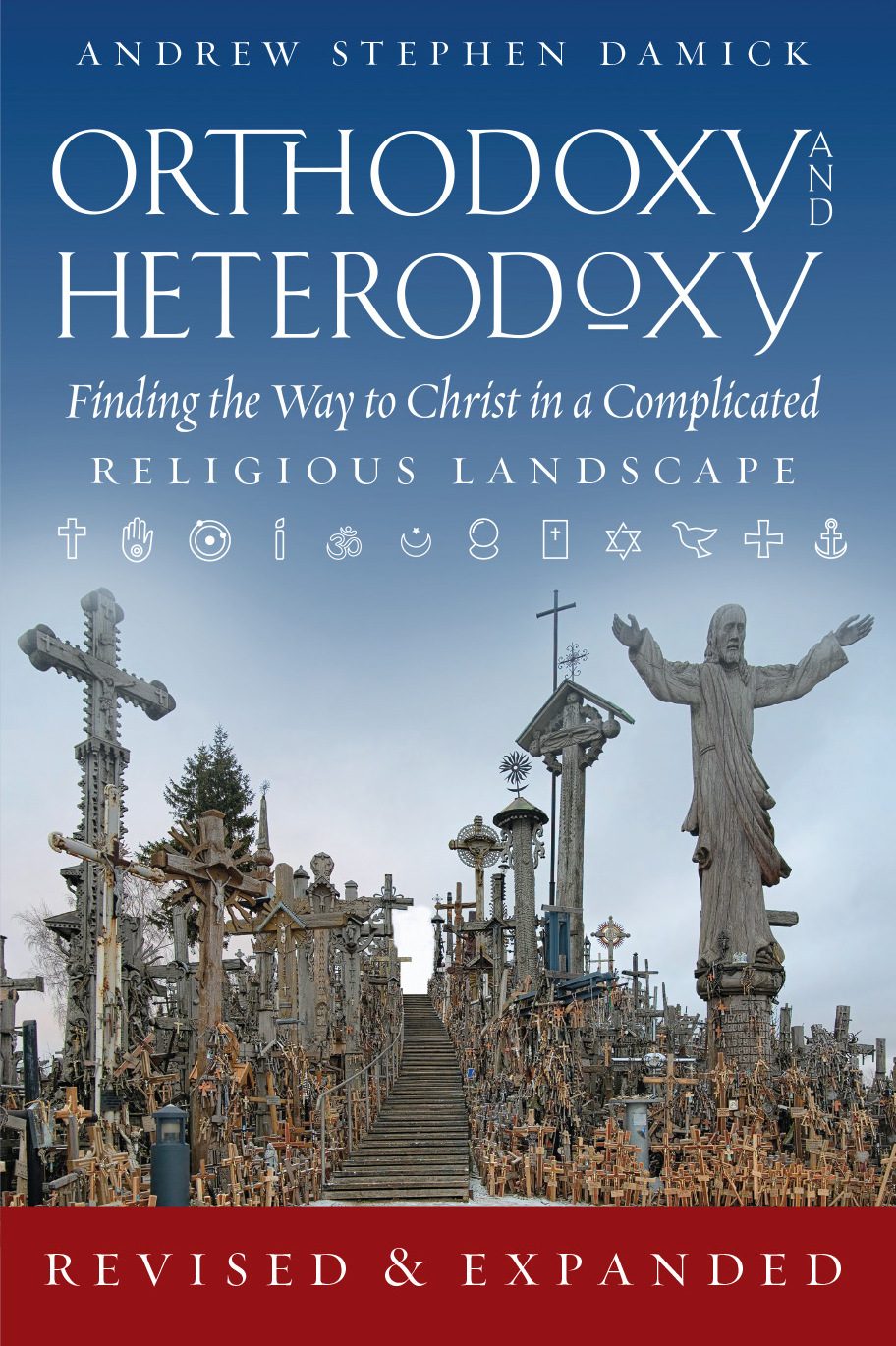 During that time, the much-expanded second editions of the podcast (2015-16) and book (2017) were released, and have continued to find a steady audience ever since. Thousands of new people listen to the podcast and/or read the book every year, and I am grateful that it has become a staple for people trying to (as the second edition’s subtitle says) “find the way to Christ in a complicated religious landscape.”
Over the life of this blog, we published about 200 articles (some are now taken down or live elsewhere, for various reasons), and I authored about half of them myself. The other half were written by over a dozen other regular authors or guest authors, many of whom are friends of mine.
So why did the blog sputter out about five years ago? I think most of us who were writing for it (especially me) were just ready to move on to other things. The original version of the O&H lectures was begun in the Fall of 2008, which means that this material has been with me for over 17 years. As you probably know, I’ve authored five more books since then, plus many more podcasts, totaling hundreds (maybe over a thousand?) episodes.
Although much of what passes for examining non-Orthodox teachings and practices these days is attack-dog polemics, I do think there is still room for more serious, level-headed apologetics, even though I am mostly done doing that myself now. I never really regarded O&H as apologetics per se, but I suppose in a sense that is its genre. The point, though, has always been to show where we agree with someone we disagree with, even while being clear about where we disagree and offering up our best critiques, assuming good faith on the part of other religious groups.
That posture has carried over somewhat into my podcast The Areopagus, which I have co-hosted with my friend Pastor Michael Landsman since 2017. There, we still try to find what is best when considering how historic Christianity engages with this modern world of ours.
Some of the material on this blog is from my late friend Fr. Matthew Baker (†2015), which is one of the reasons that I won’t be deleting this blog, because I want this work of his to live on. Much of the most interesting conversation here has been in the comments — many of which were from Fr. Matthew — and I think these are all well-worth keeping around, as well.
In a sense, I want to dedicate this whole project (as I did the 2017 book edition partly) as a memorial to Fr. Matthew. His brilliance in both mind and spirit brought out something better and higher in many of us, and we owe him a debt which cannot be repaid this side of the Kingdom — not least of which is for his insistence, per Fr. Georges Florovsky, that the phrase separated brethren must place equal gravity on both its words.
Anyway, since we are here at the end, I think the main thing is to let this corpus now speak for itself. I will say, though, that I still believe — as I have since 1997 when I made the move to convert — that the Orthodox Church is uniquely the true Church and that everyone should become a member. I think there are a lot of different and good ways to help people do that, and I mean to keep doing that. It is truly my life’s work.
To that end, I will let two of the great apologists of the Orthodox Church have the last word, which I still take as watchwords in all that I do, even if I do not always live up to them:
We need investigation and conversation in matters of theological disputation so that compelling and conspicuous arguments may be considered. Profound benefit is gained from such conversation, if the objective is not altercation but truth, and if the motive is not solely to triumph over others. Inspired by grace and bound by love, our goal is to discover the truth, and we should never lose sight of this, even when the pursuit is prolonged. Let us listen amicably so that our loving exchange might contribute to consensus.
— St. Mark of Ephesus, Patrologia Orientalis XV [Brepols, 1990], pp. 108–109
For we are not seeking victory, but to gain brethren, by whose separation from us we are torn. This we concede to you in whom we do find something of vital truth, who are sound as to the Son. We admire your life, but we do not altogether approve your doctrine…. I will even utter the Apostle’s wish. So much do I cling to you, and so much do I revere your array, and the colour of your continence, and those sacred assemblies, and the august virginity, and purification, and the psalmody that lasts all night and your love of the poor, and of the brethren, and of strangers, that I could consent to be anathema from Christ, and even to suffer something as one condemned, if only you might stand beside us, and we might glorify the Trinity together.
— St. Gregory the Theologian, Oration 41, 8
And with that, I say farewell. See you elsewhere.


